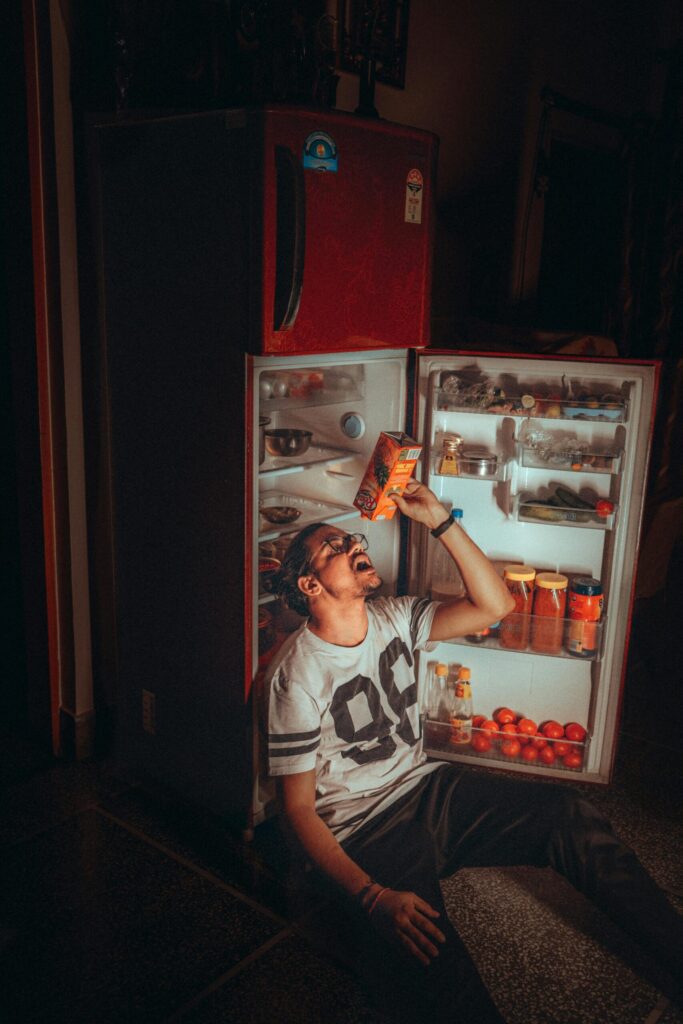

Most people think heart problems begin with dramatic things such as chain smoking for years, ignoring chest pain or eating badly for decades. Sometimes that is true. But often, the trouble starts in a quieter place. It starts at night.
That is what makes this conversation uncomfortable. The habits that can slowly wear your heart down do not always look reckless. They look normal. A late dinner after a long day. A phone in bed. A drink to relax. One more hour of work because the day felt unfinished. On the surface, none of that seems serious. But your body does not experience the evening the way you do. After sunset, it is supposed to shift into recovery. Blood pressure should dip. Stress hormones should ease off. Sleep should begin preparing the body for repair. When that handoff keeps getting interrupted, your heart pays attention.
And this matters because heart disease is not rare. In the United States, coronary heart disease killed 371,506 people in 2022, and about 1 in 20 adults age 20 and older are living with coronary artery disease. At the same time, about one-third of adults do not get enough sleep, which means millions of people are already entering the night at a disadvantage before the evening habits even begin.
So this is not a social media lecture. It is a practical guide to the night habits hurting your heart and what to do about them. Not in a perfect-world way. In a real-life way.
What Happens to Your Body After 7 PM
After 7 PM, your body is not asking for intensity. It is asking for rhythm.
This is where many people get the evening wrong. They treat the night like spare daytime. Your body does not. Evening is when your system starts moving away from performance and toward repair. Sleep timing, meal timing, and stress levels all begin to matter more because they affect whether your cardiovascular system can settle into its normal overnight pattern. Research reviewed by the American Heart Association has shown that sleep timing, sleep regularity, and sleep quality are all linked to cardiovascular risk, not just total hours slept.
That is why a chaotic evening can undo more than people realize. If you eat too late, work too late, scroll too late, and sleep at random times, you are stacking signals that tell your body to stay switched on. Over time, that makes it harder for blood pressure to dip normally, harder for sleep to do its repair work, and easier for unhealthy patterns to settle in.
What your body expects versus what modern life does
| Time | What your body is leaning toward | What many people actually do |
| 7 PM to 9 PM | Slow down, digest, lower stimulation | Heavy meal, screens, errands |
| 9 PM to 11 PM | Wind down, melatonin rises, prepare for sleep | Work, scrolling, alcohol, TV |
| After 11 PM | Deeper sleep and overnight repair | Still awake, snacking, mental stress |
That mismatch is where the damage often begins.
1. Eating Late and Heavy Meals
Late eating is one of those habits people dismiss because it feels ordinary. But when you eat heavily close to bedtime, you are asking your body to do metabolic work at the exact time it is trying to quiet down. That matters more than many people think. The American Heart Association has pointed out that meal timing affects cardiometabolic health, and large cohort research has found that later daily meal timing is associated with higher cardiovascular disease risk. In one large French study, eating the last meal after 9 PM was linked to a 28% higher risk of cerebrovascular disease, especially in women, compared with eating before 8 PM.
This does not mean you need to fear food after sunset. That would be silly. The real issue is habit. If dinner keeps happening late, and especially if it is your heaviest meal, you may be teaching your body to stay metabolically active when it should be moving toward rest. That can affect blood sugar handling, blood pressure, and sleep quality. The fix is not punishment. It is timing. Try to finish dinner earlier, and give yourself at least a couple of hours before bed when possible. That one shift often does more than people expect.
2. Screen Exposure Before Sleep
A lot of people say their phone helps them relax. I understand why. It gives you distraction, noise, and escape. But relaxation is not always the same thing as recovery.
The problem with screens at night is not just blue light, though that matters. It is also the mental activation. You are still processing information. Still reacting. Still emotionally available to other people’s opinions, headlines, messages, and nonsense. The CDC has noted that today’s electronics-heavy lifestyle has normalized inadequate sleep, and inadequate sleep is linked to poorer cardiometabolic health. Adults who sleep fewer than seven hours are more likely to report health problems, including heart attack, and they are also more likely to have conditions that raise heart risk, such as high blood pressure and diabetes.
So the question is not whether screens are evil. They are not. The question is whether your screen is delaying the handoff into sleep. If it is the last thing you see every night, there is a good chance the answer is yes. A simple improvement is to create a softer landing. Put the phone away earlier. Leave a gap before bed. Read something light. Sit quietly. Let boredom do some of the work your phone has been blocking.
3. Sleeping Late and Inconsistently
This may be the biggest one.
Many people focus on sleep length and ignore sleep timing. But the research is getting harder to ignore. The American Heart Association reported that people whose sleep duration varied by two hours or more from night to night were 85% more likely to have hypertension than people with less than an hour of variation. Another AHA-backed report published in early 2026 found that adults with an evening or “night owl” pattern had poorer cardiovascular health scores, and one analysis found a 16% higher risk of heart attack or stroke over roughly 14 years compared with those in the middle chronotype range.
That does not mean every night owl is doomed. It means irregular sleep is not harmless. Your heart likes rhythm. Your blood pressure likes rhythm. Your hormones like rhythm. When bedtime moves all over the place, your body has to keep guessing. And over the long term, that guesswork can show up in the wrong places.
What the research suggests:
| Sleep pattern | What studies have found |
| Less than 7 hours regularly | Higher likelihood of heart-related health problems and risk factors |
| Bedtime and sleep length vary a lot night to night | 85% higher likelihood of hypertension in one analysis |
| Persistent “night owl” pattern | Worse cardiovascular health scores and higher long-term event risk |
The practical lesson is simple. A steady bedtime is not boring advice. It is protective advice.
4. Late-Night Stress and Work
One of the hardest habits to confront is the one that makes you feel responsible.
Late-night work often feels virtuous. You are catching up. Answering what matters. Handling things. But the body does not always reward that behavior just because the motive sounds respectable. Evening stress can keep the nervous system activated when it should be easing down, and research summarized by the American Heart Association shows that poor sleep quality and low sleep satisfaction are linked with higher blood pressure, stiffer arteries, and coronary heart disease.
This is why some people technically go to bed on time but still wake up feeling like they never rested. They carried too much of the day into the night. Their body was in bed, but their stress was still at work.
You do not need a magical life to improve this. You need a cut-off point. At some point, the day has to end before it is fully finished. That sounds frustrating, but it is true. If your evenings never have a boundary, your heart never gets a clear signal that recovery time has started.
5. Evening Caffeine and Alcohol
People often think of caffeine and alcohol as opposites. One wakes you up. The other winds you down. In real life, both can disturb what your body is trying to do at night.
Caffeine late in the day can push sleep later and lighten sleep quality. Alcohol is trickier because it can make you feel sleepy, but feeling sleepy is not the same thing as getting restorative sleep. It can also affect the heart directly. A recent review of the evidence found that each increase of one drink per day was associated with a 6% higher risk of atrial fibrillation in a meta-analysis, while earlier meta-analyses found roughly an 8% increase in atrial fibrillation risk per extra daily drink.
That does not mean one evening drink will ruin your heart. But it does mean the nightly “I need this to relax” habit deserves more honesty than it usually gets. If alcohol has become your shortcut to switching off, it may be solving the feeling of stress while quietly creating other problems in the background. The safer pattern is to be more careful with both caffeine late in the day and alcohol late in the evening.
6. Smoking or Nicotine at Night
Nicotine is often treated like a side issue in conversations about winding down. It should not be.
Whether it comes from cigarettes, vaping, or other nicotine products, nicotine stimulates the body. It raises heart rate, tightens blood vessels, and works against the very slowing-down process the body is trying to achieve at night. The CDC is very clear that smoking is a major cause of heart disease and stroke, and it remains one of the most powerful preventable cardiovascular risks.
What makes nighttime nicotine especially deceptive is that it can become part of routine. You stop thinking of it as a stimulant and start thinking of it as a ritual. But your cardiovascular system is still responding to it as a stressor. If this is one of your habits, it is worth seeing it clearly. It is not a neutral evening companion. It is another thing asking your heart to keep working.
7. Sedentary Evenings
A sedentary evening does not sound dangerous. That is exactly why it is easy to ignore.
After work or school, most people sit through dinner, then sit through entertainment, then lie down. Hours pass with barely any movement. On its own, one quiet evening is not the issue. The issue is repetition. The science is strong here. Sedentary behavior and physical inactivity are among the leading modifiable risk factors for cardiovascular disease, and the American Heart Association advises adults to move more and sit less throughout the day. The CDC also notes that not getting enough physical activity can lead to heart disease and can raise the chances of obesity, high blood pressure, high cholesterol, and diabetes.
The good news is that the fix does not need to be dramatic. A hard workout at 10 PM is not the point. A light walk after dinner, a few minutes of stretching, or simply breaking up a long sitting block can already make the evening less physiologically stagnant. It is not glamorous, but it is useful.
What You Should Do Next
You do not need to rebuild your whole life tonight.
That is where many people fail. They read a health article, feel briefly inspired, and then try to become a different person by tomorrow morning. It rarely lasts.
A better move is to look at these night habits hurting your heart and pick the one that is most obviously costing you. For some people, it is dinner happening too late. For others, it is the phone in bed. For others, it is the endless unfinished evening where work, stress, alcohol, and poor sleep all blur together.
Start there.
Then fix the environment, not just the intention. Move dinner earlier. Charge your phone outside the bedroom. Set a work cut-off. Take a short walk after eating. Make your bedtime more regular. Small changes sound unimpressive until you repeat them long enough for your body to trust them.
That is how real change happens. Quietly. Consistently. Because in the end, this is not just about health. It is about how you live your life when things slow down. When there is no pressure. No audience. No urgency.
If you want to go deeper into that idea of understanding oneself and developing new habits read this article here: Learning to Be you and Finding Your True Self.
Conclusion
Let’s be honest. Most of the damage people do to their health does not look dramatic while it is happening. It looks ordinary. It looks like a screen glowing in the dark. A late meal because the day ran long. A drink to calm down. A bedtime that keeps shifting because life feels busy. That is why these habits are easy to defend. They feel normal.
But normal is not always harmless.
Your evening is not dead time. It is not just the leftovers of the day. It is the part of the day where your body decides whether it can finally recover. That is why these night habits hurting your heart matter so much. They do not usually break you in one night. They work quietly. They build slowly. And if you ignore them long enough, they stop looking small.
The encouraging part is that the fix is not extreme. You do not need a perfect life. You need a calmer evening. A steadier bedtime. Earlier meals. Less stimulation. Less sitting. Fewer things that keep your body switched on when it is trying to heal.
That is not complicated. It is just easy to ignore.
Do not ignore it.
Because what you do after 7 PM may feel small now, but over time, it can shape far more of your health than you think.
If you want, I can now turn this into an even more polished blog-post version with a stronger hook and smoother transitions from one section to the next.