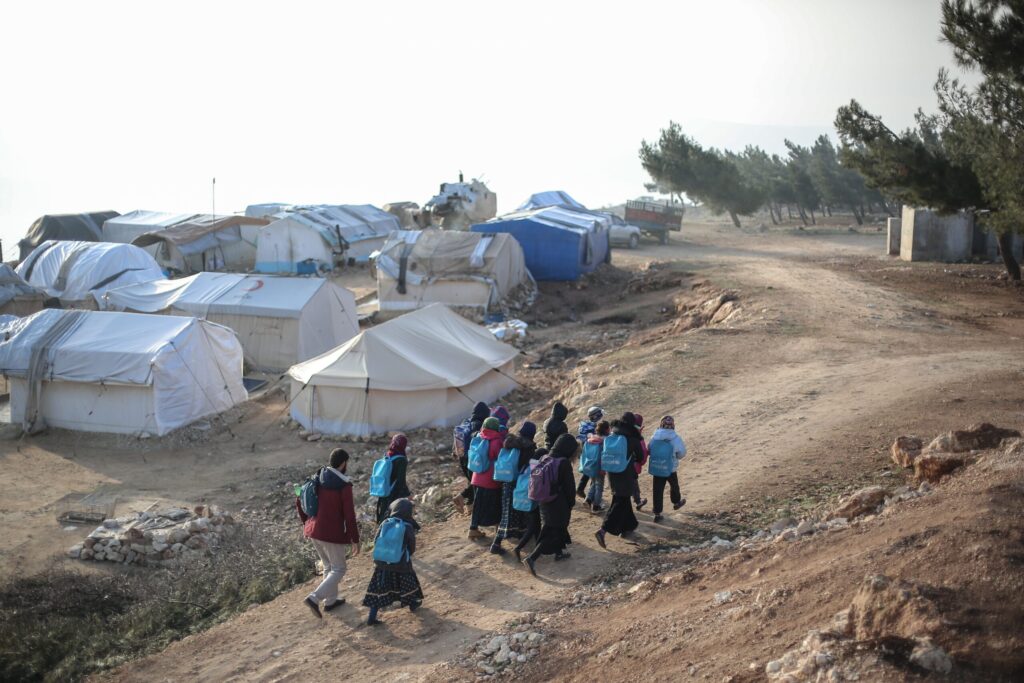

If you are a refugee living in Rwanda and you have been sitting on an acceptance letter from a Rwandan university, wondering how you are going to pay for it, UNHCR just opened the door. The Albert Einstein German Academic Refugee Initiative, known as DAFI, is a scholarship programme funded by the German government and administered by UNHCR that has been putting refugees through university since 1992. It is one of the oldest and most consistently funded refugee education programmes in the world, and right now UNHCR Rwanda has issued a call for applications for the 2026 to 2027 academic year with a deadline of August 1, 2026.
This is not a scholarship you apply for and wait years to hear back about. If you are a refugee in Rwanda who has already been admitted to a public Rwandan university for the 2026 to 2027 academic year, you are the exact person this scholarship was created for, and you have until August 1 to submit your application.
What DAFI Actually Covers
The DAFI scholarship covers university tuition fees paid directly to your institution, a monthly living stipend to cover your basic needs during the academic year, and in some cases support toward accommodation depending on your situation and the university you are attending.
The scholarship is not means-tested in the conventional sense but it is needs-aware, meaning that financial hardship is a relevant factor in selection alongside academic merit. The programme is designed specifically for refugees who have demonstrated the academic ability to pursue higher education but face financial barriers that would otherwise make it impossible.
DAFI scholars are also expected to maintain satisfactory academic progress throughout their studies. The scholarship is renewable on an annual basis, which means if you are selected for the 2026 to 2027 academic year and you perform well, you can apply for renewal in subsequent years until you complete your degree.
Who Is Eligible to Apply
The eligibility criteria for the DAFI scholarship in Rwanda are specific, and all of them must be met before you submit your application.
You must be a recognised refugee registered with UNHCR in Rwanda. Asylum seekers whose status has not yet been determined are not eligible for this cycle. Your refugee status must be formally confirmed by UNHCR Rwanda.
You must have been admitted to or be enrolled in a public university in Rwanda for the 2026 to 2027 academic year. Private university enrolments are not covered under this programme. The public universities in Rwanda include the University of Rwanda, which is the country’s main public university with campuses across Kigali, Butare, Musanze, Nyagatare, and Rwamagana, among others.
You must be a new applicant for the 2026 to 2027 academic year, meaning you have not previously received a DAFI scholarship. Returning scholars who are already on the programme renew separately through a different process.
You must be within the age range specified by UNHCR Rwanda for this cycle. While UNHCR’s global DAFI guidelines generally target students under 28 years of age, the specific age requirement for Rwanda in this cycle should be confirmed directly with UNHCR Rwanda, as it can vary by country programme.
You must demonstrate financial need and be unable to pursue university education without external support.
The Documents You Need to Gather Right Now
The deadline is August 1, 2026, which means you do not have time to be slow about this. UNHCR Rwanda has specified the following documents as required for your application.
You will need your UNHCR refugee registration documentation confirming your refugee status. If your documentation has expired or needs updating, visit your nearest UNHCR registration point before submitting your application, because an application without valid refugee documentation will not be processed.
You will need your university admission letter confirming your place at a public Rwandan university for the 2026 to 2027 academic year. If you have been admitted but have not yet received a formal letter, contact your university’s admissions office immediately.
You will need your academic transcripts from secondary school, showing your final results. These need to demonstrate that you have the academic foundation to succeed at university level.
You will need a completed DAFI application form, which is available from UNHCR Rwanda directly. The application is not submitted online. You collect the form from UNHCR Rwanda offices or from the community outreach points that UNHCR has set up for refugee communities across the country.
You will need a passport-sized photograph and copies of any other identification documents you hold.
If you need to organise and present multiple official documents in a professional manner, having a clear, labelled document folder makes a significant difference in how your application is received. The Expanding Accordion File Organiser is a practical tool for keeping your refugee documentation, transcripts, admission letters, and application forms organised and protected, particularly when you are moving between UNHCR offices and university registration points. A well-organised application signals preparation and seriousness to the committee reviewing your file.
How to Submit Your Application
Applications for the DAFI scholarship in Rwanda are submitted in person at UNHCR Rwanda offices or through the designated outreach channels for refugee communities. The official UNHCR Rwanda call for applications specifies that interested applicants should contact UNHCR Rwanda directly for the full application package and submission instructions.
UNHCR Rwanda can be reached through their official Help page at help.unhcr.org/rwanda, where this call for applications was published. The offices are located in Kigali, and outreach services operate in refugee-hosting areas across Rwanda including Mahama camp, Kiziba camp, Nyabiheke camp, Kigeme camp, and Mugombwa camp, as well as urban refugee communities in Kigali.
If you are living in a camp, speak to your community liaison officer or the UNHCR outreach worker in your area about collecting an application form. Do not wait for someone to come to you. Make the effort to go in person and ask for the form rather than waiting for outreach workers to find you.
The deadline is August 1, 2026. This is a hard deadline and late applications will not be considered.
Apply here: DAFI Scholarship Programme 2026 to 2027, UNHCR Rwanda
What DAFI Has Done Since 1992
Understanding the scale and track record of the DAFI programme matters, because it tells you that this scholarship is not a one-off initiative that might disappear next year. It is one of the most sustained refugee higher education programmes in the world.
Since its founding in 1992, DAFI has supported more than 30,000 refugees in pursuing university education across more than 50 countries. Germany’s Federal Foreign Office funds the programme and has done so consistently for more than three decades, making it one of the most reliably funded refugee scholarship programmes available anywhere.
In Rwanda specifically, DAFI has been operating for many years and has supported refugees from the Democratic Republic of the Congo, Burundi, and other countries of origin in accessing Rwandan public universities. The programme understands the Rwandan higher education context and has established relationships with Rwandan universities that make the tuition payment and student support process relatively smooth for scholars who are selected.
Being a DAFI scholar is also a credential that carries weight beyond the scholarship itself. DAFI alumni networks exist across many countries, and the programme’s association with UNHCR gives scholars a recognised framework for their educational achievement that is understood by employers, graduate schools, and organisations working in humanitarian and development sectors.
Why This Matters More Than Most Scholarships
Most scholarship articles on this site are written for students who have options. Students who are choosing between universities, comparing scholarship values, and deciding which country offers the best return on their academic investment. This scholarship is different, and it is worth being direct about that.
If you are a refugee in Rwanda, you did not choose your circumstances. You did not choose to be displaced. And the barriers between you and a university education are not just financial. They include documentation challenges, limited access to information, social isolation, and the psychological weight of rebuilding a life in a country that is not your own. DAFI exists precisely because those barriers are real and because the German government and UNHCR have decided, consistently for more than thirty years, that talented people who have been displaced by conflict deserve access to the same educational opportunities as everyone else.
If you know a refugee in Rwanda who has been admitted to a public university and does not know this scholarship exists, share this article with them today. The deadline is August 1 and that is close enough that days matter.
Key Facts Summary
| Detail | Information |
| Scholarship name | DAFI (Albert Einstein German Academic Refugee Initiative) |
| Administered by | UNHCR Rwanda |
| Funded by | German Federal Foreign Office |
| Programme history | Running since 1992, over 30,000 scholars globally |
| Eligible applicants | Recognised refugees registered with UNHCR Rwanda |
| Study level | Undergraduate at public Rwandan universities |
| Coverage | Tuition fees, monthly stipend, possible accommodation support |
| Renewable | Yes, annually subject to academic performance |
| Application deadline | August 1, 2026 |
| Application method | In person at UNHCR Rwanda offices or outreach points |
| New applicants only | Yes, returning scholars renew separately |
| Contact | help.unhcr.org/rwanda |
Apply here: DAFI Scholarship Programme 2026 to 2027, UNHCR Rwanda
If You Are Reading This and You Are Not a Refugee in Rwanda
If this specific scholarship does not apply to your situation but you are a refugee or displaced person exploring higher education options more broadly, DAFI operates in more than 50 countries and you should check whether UNHCR in your country of asylum runs a similar programme. Head to help.unhcr.org, select your country of asylum, and look for local scholarship or education programme announcements from UNHCR in your area.
If you are a student who is not a refugee but you are looking for scholarship opportunities, The Lantern Post covers fully funded opportunities across dozens of countries and disciplines. Our recent posts on the Slovakia scholarship that gives you €15,000 to study in Europe, how to write a scholarship essay that actually gets you selected, the University of Warwick scholarships for 2027, and whether that scholarship you found online is actually real are all worth reading if you are in the middle of a scholarship search right now.
And if you are helping someone else prepare their application and you want to make sure their documents are presented clearly and professionally, the right preparation tools matter. A Ballpoint Pen Set for signing forms legibly, a Clear Document Sleeve Set for protecting original documents during submission, and a reliable Portable Document Scanner for creating backup copies of everything before you hand originals to any office are small investments that protect months of preparation work.
The August 1 deadline is the only date that matters right now. If you are eligible, apply. If you know someone who is eligible, share this with them today.
This post contains affiliate links. If you make a purchase through one, Lantern Post may earn a small commission at no extra cost to you.
Also on The Lantern Post:
- The MBS Scholarship: Your Ticket to a Free MBA in Australia
- 40 Fully Funded Scholarships to Study in Europe for International Students
- Win $20,000: Apply to the Coca-Cola Scholars Program
- Your Scholarship Recommendation Letter Might Be Sabotaging You