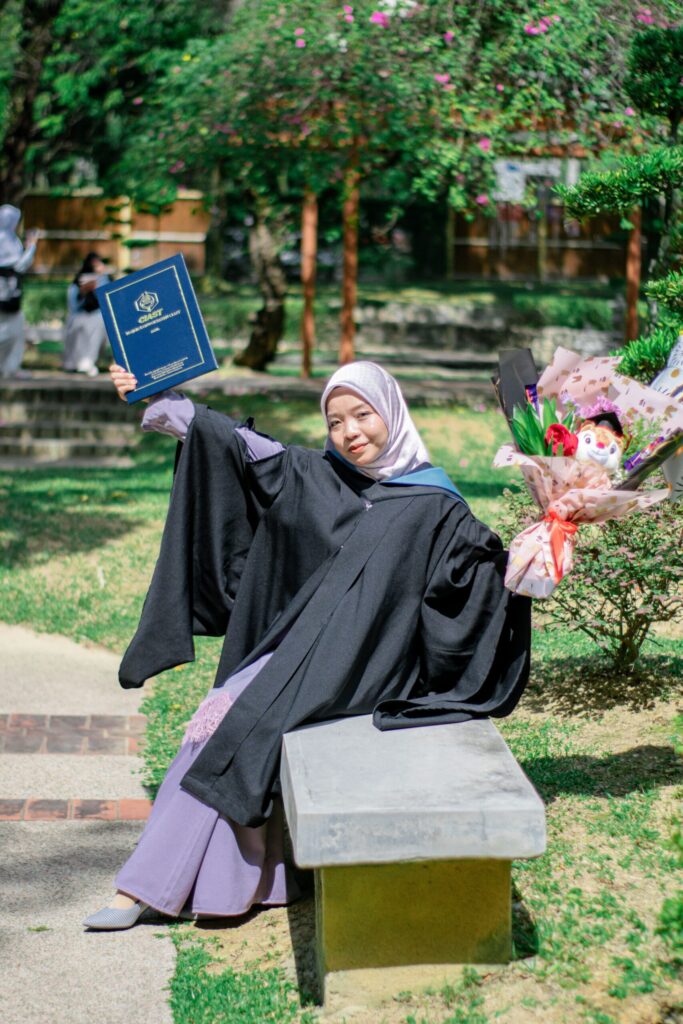

What would it take to earn a fully funded place at the University of Oxford? Excellent academic results are important, but you also need to demonstrate the potential to make a meaningful contribution to your field. The Oxford Clarendon Scholarship 2027/28 offers outstanding graduate applicants an opportunity to study at one of the world’s leading universities without paying their course fees.
The scholarship covers tuition fees in full and provides a grant towards living expenses. It supports students pursuing master’s and doctoral degrees across different academic disciplines. Even better, it is open to applicants from every country. There are no nationality or country-of-residence restrictions.
Oxford awards more than 200 new Clarendon scholarships each year. You do not need to complete a separate scholarship application. Your graduate admission application automatically puts you into consideration if you meet the relevant deadline.
What Is the Oxford Clarendon Scholarship?
The Clarendon Fund is a graduate scholarship programme established by the University of Oxford to attract academically outstanding students from around the world. It supports students pursuing eligible master’s and doctoral programmes at Oxford.
The scholarship covers all academic subject areas. Whether your interests are in engineering, medicine, law, business, education, social sciences, humanities or natural sciences, you can be considered if your chosen programme is eligible.
Clarendon is particularly attractive because it combines financial support with access to Oxford’s academic environment and international research community. The university currently supports more than 700 Clarendon scholars from around 70 countries.
For the 2027/28 academic year, Oxford continues to list Clarendon among its graduate funding opportunities.
Official website: Clarendon Fund
What Does the Clarendon Scholarship Cover?
The scholarship provides two major financial benefits.
- Full tuition fees:
Clarendon covers your course fees in full. This applies to both UK and international fee-status students. You do not have to pay the difference between domestic and overseas tuition fees because of your nationality.
- Annual living-cost grant
Full-time Clarendon scholars receive an annual grant for living expenses. Oxford sets this at no less than the UK Research and Innovation (UKRI) minimum doctoral stipend rate. For the 2026/27 academic year, the minimum rate is £21,805 per year.
That is approximately £1,817 per month. The 2027/28 stipend rate has not yet been confirmed. Oxford will apply the relevant rate for the academic year.
| Scholarship benefit | Coverage |
| Tuition fees | 100% of eligible course fees |
| Living expenses | Annual grant at least equal to the applicable UKRI minimum doctoral stipend for full-time scholars |
| Funding duration | Normally the period during which you are liable for course fees |
| Part-time study | Full course fees and a variable study-support grant |
Part-time scholars receive a study-support grant rather than the full-time living stipend. Its amount depends on the course and study arrangements.
How Long does the Funding Last?
Clarendon normally supports scholars throughout their course’s fee-liability period. This period varies depending on the degree. Some academic divisions may approve additional study support beyond the normal fee-liability period. However, continuation fees are not automatically covered.
One important point: Oxford estimates living costs for a single graduate student in 2027/28 at approximately £1,475 to £2,175 per month. You should consider this when planning your budget, especially if you have dependants.
Official funding information: Information for applicants.
Who Can Apply for the Oxford Clarendon Scholarship?
The scholarship is open to applicants from all nationalities. You can apply whether you are from Africa, Asia, Europe, the Americas or another region. Your country of ordinary residence does not determine your eligibility.
However, you must meet the following general conditions:
- You must be applying for a new master’s or DPhil programme at the University of Oxford.
- Your chosen course must be an eligible graduate programme.
- You must submit your complete graduate application by the relevant December or January deadline.
- You must demonstrate outstanding academic merit and potential.
- You must satisfy the admission requirements of your chosen department.
Both full-time and part-time master’s and DPhil programmes are eligible.
- Can Current Oxford Students Apply?
Yes, in certain circumstances. A student currently completing a master’s degree at Oxford can be considered when applying for a new DPhil programme or a second master’s degree.
However, students who are simply continuing the same degree are not eligible. Applicants holding deferred graduate offers are also excluded.
- Is there an Age Limit?
Oxford does not list a general age restriction for Clarendon applicants. Your academic qualifications, potential and suitability for the proposed programme are the important considerations.
Official eligibility information: Information for applicants.
Which Courses Are Eligible?
Clarendon supports graduate programmes across Oxford’s academic divisions.
These include:
- Humanities.
- Mathematical, Physical and Life Sciences.
- Medical Sciences.
- Social Sciences.
- Oxford’s Department for Continuing Education.
The scholarship is available for eligible master’s and DPhil programmes. You can therefore explore a wide range of subjects, including:
| Academic area | Examples of possible study interests |
| Engineering and technology | Computer science, engineering and artificial intelligence |
| Business and economics | MBA, economics and management |
| Medicine and health | Clinical medicine, public health and biomedical sciences |
| Law | International law, human rights and legal research |
| Humanities | History, literature, philosophy and languages |
| Social sciences | Education, politics, sociology and international development |
| Natural sciences | Biology, chemistry, physics and environmental sciences |
These are examples of academic areas, not a guarantee that every course has the same admission deadline or funding arrangements. Before applying, check the individual course page to confirm eligibility, entry requirements and the funding deadline.
Oxford graduate courses: Courses
How Are Clarendon Scholars Selected?
Clarendon is highly competitive. Oxford selects scholars based on academic merit and future potential. The university considers several aspects of your application:
- Academic record
Your previous academic performance is one of the most important considerations. Strong grades and evidence of intellectual ability can strengthen your application.
- Research potential
For research-based programmes, your research proposal, previous research experience and academic interests may help demonstrate your ability to contribute to your chosen field.
- Academic references
Your referees should be able to explain your academic strengths, research ability and suitability for advanced study.
- Commitment to your chosen programme
Your personal statement should demonstrate why you want to study the course and how it connects with your academic and professional ambitions. Departments assess graduate applications and nominate outstanding candidates for Clarendon consideration. Academic divisions then review nominations and allocate awards. Meeting the admission requirements does not guarantee a scholarship.
Documents You Should Prepare
There is no separate Clarendon scholarship application or additional scholarship document. Instead, Oxford uses your normal graduate admission application to assess you for the award.
The documents required depend on your chosen course. However, you should prepare for the following:
- Academic certificates: Your previous university degree certificates.
- Academic transcripts: Official records showing your courses and grades.
- Curriculum vitae: A clear summary of your education, research, publications and relevant experience, where requested.
- Personal statement: An explanation of your academic interests, motivation and suitability for the course.
- Academic references: Recommendations from people familiar with your academic ability.
- Research proposal: Required for many research-based programmes.
- English language evidence: IELTS, TOEFL or other accepted evidence, if your course requires it.
Some programmes require additional documents, written work, admissions tests or interviews. Check the course page carefully. Missing documents can weaken your application or prevent it from being considered.
How to Apply for the Oxford Clarendon Scholarship 2027/28
The application process is straightforward because there is no separate scholarship form. However, you must complete the Oxford graduate admission application correctly and before the relevant deadline.
Step 1: Find an eligible graduate course
Visit Oxford’s graduate course directory. Choose a master’s or DPhil programme that matches your academic qualifications and future plans.
Step 2: Check the course deadline
Every graduate programme has its own application deadline. For Clarendon consideration, you must apply by the relevant December or January deadline specified for your course. Do not assume that all Oxford programmes share one deadline.
Step 3: Prepare your application documents
Read the course requirements and collect all the required documents. Pay particular attention to academic references and research proposals. These may take time to prepare.
Step 4: Submit your Oxford graduate application
Complete the online application through Oxford’s graduate admissions system. You do not need to select a separate Clarendon application form.
Step 5: Receive automatic scholarship consideration
If you submit an eligible application by the relevant deadline, Oxford automatically considers you for Clarendon. The department assesses your academic application and may nominate you for the scholarship.
Step 6: Wait for the outcome
Successful Clarendon candidates are normally contacted by email. Most initial scholarship offers are sent by the end of April. If you have not received an offer by mid-June, Oxford advises applicants to assume they have not been selected.
Apply through the official Oxford graduate admissions website: Application Guide.
Important Application Deadlines for 2027/28
There is no single Clarendon scholarship deadline. Your deadline depends on the graduate course you choose. For the 2027/28 academic year, Oxford requires applicants to submit their graduate applications by the relevant December or January deadline for their programme.
Some courses have December deadlines, while others have January deadlines. This distinction is important. Applying in January does not automatically make you eligible for Clarendon if your chosen programme has a December funding deadline.
You should check the exact date on the official course page before starting your application.
| Application stage | Expected timing |
| Graduate applications | December 2026 or January 2027, depending on course |
| Departmental assessment and nominations | Early 2027 |
| Divisional scholarship selection | February–March 2027 |
| Most initial Clarendon offers | By the end of April 2027 |
| Applicants without an offer should assume unsuccessful | By mid-June 2027 |
Oxford does not publish one universal deadline for all Clarendon applicants. The course-specific deadline is the date you must follow.
Official deadline guidance: Information for applicants.
Tips for Winning the Clarendon Scholarship
Oxford receives applications from academically talented people around the world. You should therefore prepare an application that demonstrates both excellence and potential.
- Aim for Outstanding Academic Results.
Your academic record is central to the selection process. If you have consistently performed well, make sure your transcripts clearly demonstrate this.
- Choose your course strategically.
Do not select a programme simply because it is offered by Oxford. Choose one that fits your academic background and future goals.
- Develop a strong research proposal.
If your course requires a research proposal, make it clear, focused and academically convincing. Explain the research problem, its significance and how you intend to investigate it.
- Choose your referees carefully.
Ask academics who understand your work and can provide detailed recommendations. Give them enough time to prepare their letters.
- Write a convincing personal statement.
Explain why you want to pursue the course, what you hope to achieve and how Oxford fits into your plans.
- Submit before the funding deadline.
This is essential. A late application cannot be considered for Clarendon simply because the course continues accepting applications for another purpose.
Frequently Asked Questions
- Is the Oxford Clarendon Scholarship fully funded?
Clarendon covers course fees in full and provides a living-cost grant for full-time scholars. Part-time scholars receive a variable study-support grant instead of the full-time living stipend.
- Can international students apply?
Yes. There are no restrictions based on nationality or country of ordinary residence.
- How many Clarendon scholarships are awarded each year?
Oxford offers more than 200 new Clarendon scholarships each year.
- Do I need a separate scholarship application?
No. You are automatically considered when you submit an eligible graduate application by the relevant December or January deadline.
- Can I apply for a master’s degree?
Yes. Eligible full-time and part-time master’s programmes are covered.
- Can I apply for a PhD?
Yes. Oxford calls its doctoral research degree a DPhil. Eligible full-time and part-time DPhil programmes are covered.
- How much is the living allowance?
For 2026/27, the minimum full-time annual grant is £21,805. The 2027/28 rate has not yet been confirmed.
- When will successful applicants receive their results?
Most initial scholarship offers are sent by the end of April 2027.
Final Thoughts
The Oxford Clarendon Scholarship 2027/28 offers an excellent opportunity to pursue graduate studies at one of the world’s most respected universities. Its combination of full course-fee coverage and living-cost support makes it particularly valuable. The opportunity is also open to applicants worldwide, with no restrictions based on nationality or academic subject.
However, you should not wait until the end of the year to begin preparing. Oxford’s graduate application process requires careful attention to course requirements, references deadlines. Find your preferred programme, check its December or January deadline and prepare your documents early.
Also on the Lantern Post:
- Earn a Free PhD with the Hong Kong PhD Fellowship Scheme
- How to Win the EDISS Erasmus Mundus Scholarship 2027
- How to Study in China for Free the Yenching Scholarship
- 11 Best Diet Books for Healthy Eating and Better Living